
Faculty Profile
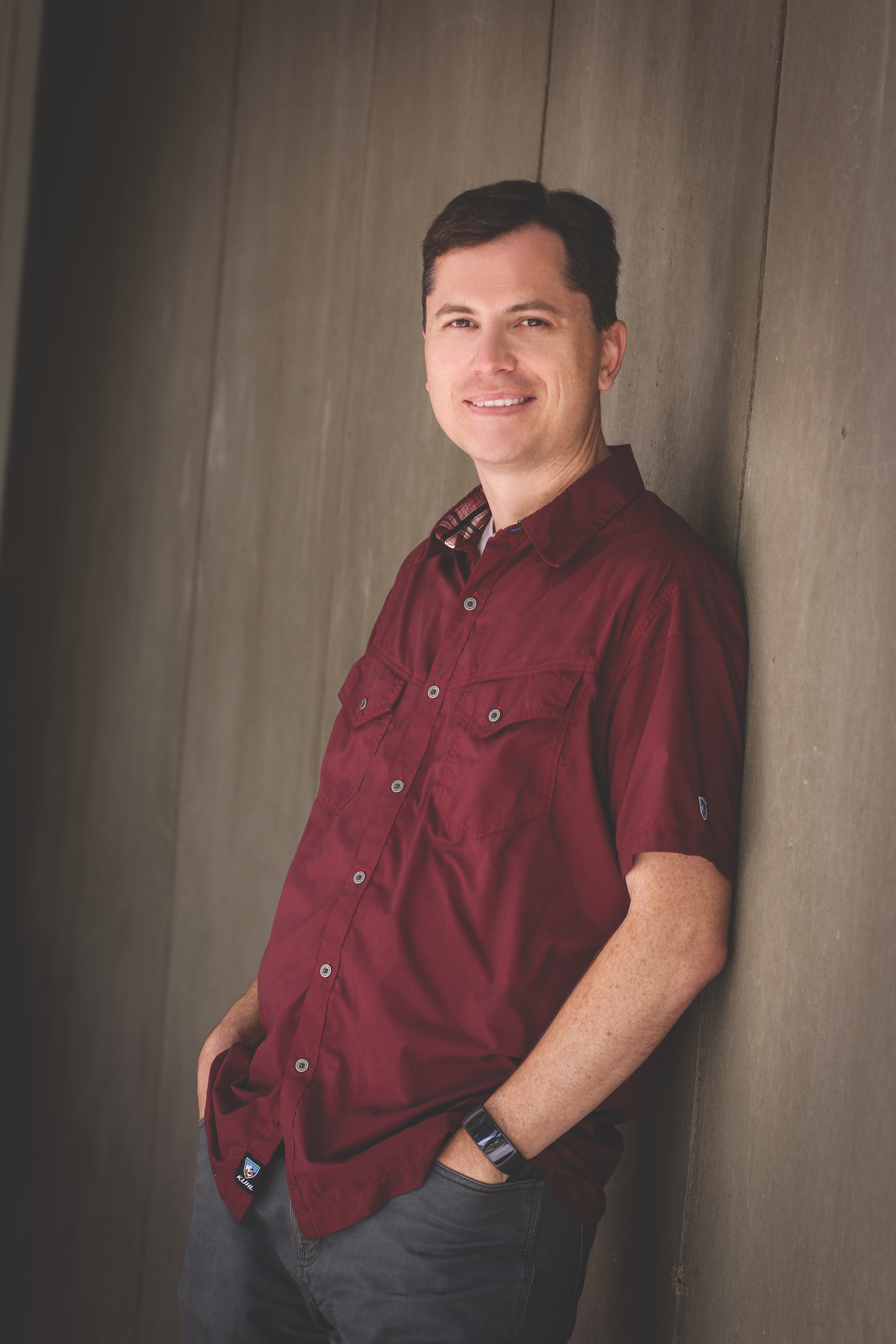
James Sutherland
Associate Department Chair
Professor
-
CV
Curriculum Vitae -
Office
3290 H MEB -
Website
https://sutherland.che.utah.edu -
Email
James.Sutherland@utah.edu
Research Interests
Carbon Dioxide
Co2 Capture
Coal Combustion
Combustion
Combustion Simulation
Computational Fluid Dynamics
Computational Transport Phenomena
Computer Simulation
Computer Simulation or Modeling
Energy
Energy Efficiency
Energy Storage Systems
High Performance Computing
High-performance Computing
Low-mach Reacting Flows
Machine Learning/ Artifical Intelligence
Numerical Analysis
Numerical Modeling
Numerical modeling
Optimization
Oxy-fuel Combustion
Oxyfuel Combustion
Reacting Flows; Reduced-order Modeling & Machine Learning
Turbulent Reacting Flow
Awards & Honors
- College of Engineering Outstanding Teacher award, University of Utah College of Engineering 08/2017
- Department of Chemical Engineering Outstanding Faculty award. Presented by the senior class to a faculty member annually., University of Utah Department of Chemical Engineering 04/2017
- Best lecturer award from Chemical Engineering class of 2016.
- Top 10% teaching in college of engineering 2014
- Oblad Award 2001
- All-American Award in Pistol Shooting 1999
Publications
- K Zdybał, J C Sutherland, A Parente. (2025). Optimizing progress variables for ammonia/hydrogen combustion using encoding–decoding networks. Combustion and Flame, 276.
- Kamila Zdybał, James C Sutherland, Alessandro Parente. (2025). Optimizing progress variables for ammonia/hydrogen combustion using encoding–decoding networks. Combustion and Flame, 276(114152).
- Kamila Zdybał, James C Sutherland, Alessandro Parente. (2025). Optimizing progress variables for ammonia/hydrogen combustion using encoding–decoding networks. Combustion and Flame, 276.
- Kamila Zdybal, James C Sutherland, Alessandro Parente. (2025). Optimizing progress variables for ammonia/hydrogen combustion using encoding-decoding networks. COMBUSTION AND FLAME, 276(ARTN 114152).
- Milind DEO, Michael Bartl, Darryl BUTT, Greeshma Gadikota, Michael HOEPFNER, John Kaszuba, Jules MAGDA, SWOMITRA MOHANTY, John MCLENNAN, Jan Miller, Jiaoyan Li, Subhash Risbud, Brian MCPHERSON, Bryony Richards, Yidong Xia, Adn van Duin, Illya Zharov, James SUTHERLAND. (2024). EFRC-MUSE: Multi-Scale Fluid-Solid Interactions in Architected and Natural Materials.
- Elizabeth Armstrong, Michael A Hansen, Robert C Knaus, Nathaniel A Trask, John C Hewson, James C Sutherland. (2024). Accurate Compression of Tabulated Chemistry Models with Partition of Unity Networks. Combustion Science and Technology, 196(6).
- Elizabeth Armstrong, James C Sutherland. (2024). Reduced-order modeling with reconstruction-informed projections. Combustion and Flame, 259.
- Kamila Zdybał, Alessandro Parente, James C Sutherland. (2023). Improving reduced-order models through nonlinear decoding of projection-dependent outputs. Patterns, 4(11).
- Elizabeth Armstrong, John C Hewson, James C Sutherland. (2023). Characterizing Tradeoffs in Memory, Accuracy, and Speed for Chemistry Tabulation Techniques. Combustion Science and Technology, 195(11).
- Kamila Zdybał, Elizabeth Armstrong, Alessandro Parente, James C Sutherland. (2023). PCAfold 2.0—Novel tools and algorithms for low-dimensional manifold assessment and optimization. SoftwareX, 23.
- Kamila Zdybał, Giuseppe D’Alessio, Antonio Attili, Axel Coussement, James C Sutherland, Alessandro Parente. (2023). Local manifold learning and its link to domain-based physics knowledge. Applications in Energy and Combustion Science, 14.
- Kamila Zdybal, Giuseppe Alessio, Gianmarco Aversano, Mohammad Rafi Malik, James SUTHERLAND, Alessandro Parente. (2023). Advancing Reacting Flow Simulations with Data-Driven Models. Cambridge University Press.
- Kamila Zdybał, James C Sutherland, Alessandro Parente. (2023). Manifold-informed state vector subset for reduced-order modeling. Proceedings of the Combustion Institute, 39(4).
- K Zdybał, M R Malik, A Coussement, J C Sutherland, A Parente. (2023). Reduced-Order Modeling of Reacting Flows Using Data-Driven Approaches. Lecture Notes in Energy, 44.
- Josh McConnell, Weston Ortiz, James C Sutherland, Pania Newell, Anne M Grillet, Anthony M McMaster, Rajkumar B Bhakta, Rekha R Rao. (2022). Computational modeling and experiments of an elastoviscoplastic fluid in a thin mold-filling geometry. Journal of Non-Newtonian Fluid Mechanics, 307.
- Kamila Zdybał, Elizabeth Armstrong, James C Sutherland, Alessandro Parente. (2022). Cost function for low-dimensional manifold topology assessment. Scientific Reports, 12(1).
- Mokbel Karam, James C Sutherland, Tony Saad. (2021). Low-cost Runge-Kutta integrators for incompressible flow simulations. Journal of Computational Physics, 443.
- Hang Zhou, Josh McConnell, Terry RING, James SUTHERLAND. (2021). Insights of MILD Combustion from High-Fidelity Simulations. Springer Nature.
- Hang Zhou, Josh McConnell, Terry A Ring, James C Sutherland. (2021). Characterization of temperature criteria using gas-phase fuel streams for MILD coal combustion. Fuel, 296.
- Hayden A Hedworth, Mokbel Karam, Josh McConnell, James C Sutherland, Tony Saad. (2021). Mitigation strategies for airborne disease transmission in orchestras using computational fluid dynamics. Science Advances, 7(26).
- Elizabeth Armstrong, James C Sutherland. (2021). A technique for characterising feature size and quality of manifolds. Combustion Theory and Modelling, 25(4).
- Qi Rao, Yidong Xia, Jiaoyan Li, Joshua McConnell, James Sutherland, Zhen Li. (2021). A modified many-body dissipative particle dynamics model for mesoscopic fluid simulation: methodology, calibration, and application for hydrocarbon and water. Molecular Simulation, 47(4).
- Hang Zhou, Terry A Ring, James C Sutherland. (2021). Additional criteria for MILD coal combustion. Proceedings of the Combustion Institute, 38(3).
- Kamila Zdybał, Elizabeth Armstrong, Alessandro Parente, James C Sutherland. (2020). PCAfold: Python software to generate, analyze and improve PCA-derived low-dimensional manifolds. SoftwareX, 12.
- Mokbel Karam, James C Sutherland, Tony Saad. (2020). PyModPDE: A python software for modified equation analysis. SoftwareX, 12.
- Josh McConnell, James C Sutherland. (2020). Assessment of various tar and soot treatment methods and a priori analysis of the steady laminar flamelet model for use in coal combustion simulation. Fuel, 265.
- Brad Peterson, Alan Humphrey, Dan Sunderland, James Sutherland, Tony Saad, Harish Dasari, Martin Berzins. (2019). Automatic Halo Management for the Uintah GPU-Heterogeneous Asynchronous Many-Task Runtime. International Journal of Parallel Programming, 47(5-6).
- Michael A Hansen, Elizabeth Armstrong, James C Sutherland. (2018). State space parameterization of explosive eigenvalues during autoignition. Combustion and Flame, 196.
- Michael A Hansen, James C Sutherland. (2018). On the consistency of state vectors and Jacobian matrices. Combustion and Flame, 193.
- Josh McConnell, Babak Goshayeshi, James C Sutherland. (2017). An evaluation of the efficacy of various coal combustion models for predicting char burnout. Fuel, 201.
- Michael Alan Hansen, James Clayton Sutherland. (2017). Dual timestepping methods for detailed combustion chemistry. Combustion Theory and Modelling, 21(2).
- Tony Saad, Derek Cline, Rob Stoll, James C Sutherland. (2017). Scalable Tools for Generating Synthetic Isotropic Turbulence with Arbitrary Spectra. AIAA Journal, 55(1).
- Josh McConnell, James C Sutherland. (2017). The effect of model fidelity on prediction of char burnout for single-particle coal combustion. Proceedings of the Combustion Institute, 36(2).
- Tony Saad, James C Sutherland. (2016). Comment on “Diffusion by a random velocity field” [Phys. Fluids 13, 22 (1970)]. Physics of Fluids, 28(11).
- Tony Saad, James C Sutherland. (2016). Wasatch: An architecture-proof multiphysics development environment using a Domain Specific Language and graph theory. Journal of Computational Science, 17.
- Naveen Punati, Haiou Wang, Evatt R Hawkes, James C Sutherland. (2016). One-Dimensional Modeling of Turbulent Premixed Jet Flames - Comparison to DNS. Flow, Turbulence and Combustion, 97(3).
- Nathan Yonkee, James C Sutherland. (2016). PoKiTT: Exposing Task and Data Parallelism on Heterogeneous Architectures for Detailed Chemical Kinetics, Transport, and Thermodynamics Calculations. SIAM Journal on Scientific Computing, 38(5).
- M A Hansen, J C Sutherland. (2016). Pseudotransient Continuation for Combustion Simulation with Detailed Reaction Mechanisms. SIAM Journal on Scientific Computing, 38(2).
- Babak Goshayeshi, James C Sutherland. (2015). A comparative study of thermochemistry models for oxy-coal combustion simulation. Combustion and Flame, 162(10).
- Amir Biglari, James C Sutherland. (2015). An a-posteriori evaluation of principal component analysis-based models for turbulent combustion simulations. Combustion and Flame, 162(10).
- Benjamin J Isaac, Jeremy N Thornock, James Sutherland, Philip J Smith, Alessandro Parente. (2015). Advanced regression methods for combustion modelling using principal components. Combustion and Flame, 162(6).
- Babak Goshayeshi, James C Sutherland. (2015). Prediction of oxy-coal flame stand-off using high-fidelity thermochemical models and the one-dimensional turbulence model. Proceedings of the Combustion Institute, 35(3).
- Babak Goshayeshi, James C Sutherland. (2014). A comparison of various models in predicting ignition delay in single-particle coal combustion. Combustion and Flame, 161(7).
- Alessandro Parente, James C Sutherland. (2013). Principal component analysis of turbulent combustion data: Data pre-processing and manifold sensitivity. Combustion and Flame, 160(2).
- JAMES SUTHERLAND, John Schmidt, Martin BERZINS, Jeremy Thornock, Tony SAAD. (2013). Large scale parallel solution of incompressible flow problems using uintah and hypre. 13th IEEE/ACM International Symposium on Cluster, Cloud and Grid Computing (CCGrid).
- Patrick K Notz, Roger P Pawlowski, James C Sutherland. (2012). Graph-Based Software Design for Managing Complexity and Enabling Concurrency in Multiphysics PDE Software. ACM Transactions on Mathematical Software, 39(1).
- Amir Biglari, James C Sutherland. (2012). A filter-independent model identification technique for turbulent combustion modeling. Combustion and Flame, 159(5).
- Naveen Punati, James C Sutherland, Alan R Kerstein, Evatt R Hawkes, Jacqueline H Chen. (2011). An evaluation of the one-dimensional turbulence model: Comparison with direct numerical simulations of CO/H2 jets with extinction and reignition. Proceedings of the Combustion Institute, 33(1).
- Tarek Echekki, Alan R Kerstein, James C Sutherland. (2011). The One-Dimensional-Turbulence Model. Fluid Mechanics and Its Applications, 95.
- James C Sutherland, Alessandro Parente. (2009). Combustion modeling using principal component analysis. Proceedings of the Combustion Institute, 32(1).
- A Parente, J C Sutherland, L Tognotti, P J Smith. (2009). Identification of low-dimensional manifolds in turbulent flames. Proceedings of the Combustion Institute, 32(1).
- James C Sutherland, Philip J Smith, Jacqueline H Chen. (2007). A quantitative method for a priori evaluation of combustion reaction models. Combustion Theory and Modelling, 11(2).
- Evatt R Hawkes, Ramanan Sankaran, James C Sutherland, Jacqueline H Chen. (2007). Scalar mixing in direct numerical simulations of temporally evolving plane jet flames with skeletal CO/H2 kinetics. Proceedings of the Combustion Institute, 31(1).
- J C Sutherland, P J Smith, J H Chen. (2005). Quantification of differential diffusion in nonpremixed systems. Combustion Theory and Modelling, 9(2).
- Evatt R Hawkes, Ramanan Sankaran, James C Sutherland, Jacqueline H Chen. (2005). Direct numerical simulation of turbulent combustion: fundamental insights towards predictive models. Journal of Physics Conference Series, 16(1).
- James C Sutherland, Christopher A Kennedy. (2003). Improved boundary conditions for viscous, reacting, compressible flows. Journal of Computational Physics, 191(2).